
White Paper on Standards for Smart Buildings
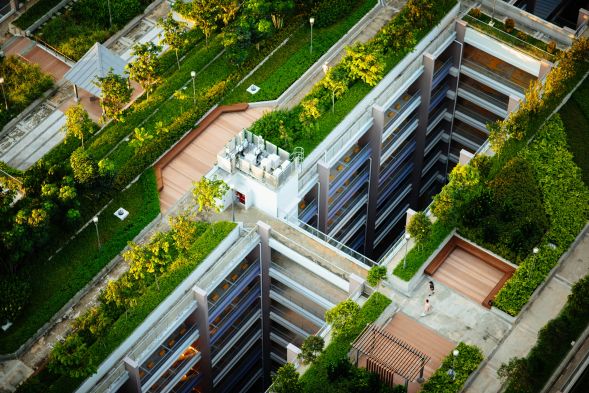
Smart buildings are rapidly transforming Singapore's urban landscape, integrating advanced digital technologies to create more efficient, sustainable, and intelligent environments. As buildings become increasingly autonomous through IoT, AI, digital twins, and cloud computing, the need for comprehensive standards to guide their implementation becomes critical for ensuring interoperability, security, and sustainability.
The Coordinating Committee for Smart Nation (CCSN) under the Singapore Standards Council (SSC) has developed this white paper to provide guidance on the technological standards and frameworks essential for effective implementation and management of smart building digital systems. This publication addresses three fundamental challenges facing smart building deployment: achieving seamless system integration, maintaining robust cybersecurity, and optimising sustainability performance in Singapore's tropical climate.
The "White Paper on Standards for Smart Buildings" references key international and national standards that support smart building initiatives. It focuses on standards that enable interoperability across diverse building systems, such as the ISO 16484 series for building automation and control systems, and BACnet protocols for standardised communication. For cybersecurity, it highlights frameworks like IEC 62443 series for industrial control system security and NIST Cybersecurity Framework for comprehensive protection strategies. The paper also maps sustainability standards including ISO 15392 for sustainable building practices and SS ISO 50001 for energy management systems, supporting Singapore's Green Plan 2030 objectives.
Building owners, facility managers, system integrators, and technology providers can use this white paper as a informative guide in their adoption of smart building technologies and standards. It provides recommendations for implementing integrated systems architecture, establishing common data environments, and deploying advanced technologies like digital twins and IoT platforms. The mapping of relevant standards also helps organisations navigate the complex landscape of smart building implementation whilst ensuring compliance with cybersecurity requirements and sustainability goals as Singapore transitions towards autonomous, future-ready buildings.